




The Linux server OS you choose will impact all aspects of your hosting environment, whether it’s for cloud hosting, VPS, enterprise infrastructure, or your business application stack. It will impact your server OS’s uptime, available packages, your chosen patching strategy, support life cycle, security, and the long-term maintenance cost.
Luckily, you have many options when it comes to Linux. Choosing the right option for you might be a bit harder.
Stability? Latest packages? Is your business looking for a longer support window with a commercial backing? Is deployment onto cloud platforms really a determining factor? From all your options, you have Ubuntu Server 24.04 LTS and it is a long term option. Ubuntu has a good support window. Other options are Rocky Linux, AlmaLinux, or the latest flag ship and paid enterprise option, fully commercial: Red Hat Enterprise Linux 10. (Ubuntu)
No, there will never only be one single option for Linux. Best Linux servers changes based on your position. This guide simplifies the selection process to allow you to choose the server software with the best potential for you.
What is the Best Linux Server OS?
From the many options for a server OS, figure out what is most important to you. You will really appreciate having this differentiation.
When looking for a new Linux operating system for a server, consider ones that maintain stability, quicker package updates, security protocols, and high package support. Additional emphasis placed on production environments with extensive support window policies that govern right when a forced migration occurs. Ubuntu, Rocky Linux, and Debian tend to focus on that. (Linux)
When thinking about what system to run, compatibility is fundamental. Some companies fully depend on Linux environments built around Red Hat systems. Others like Debian because of its apt system and software accessible ecosystem. And people using the Cloud prefer Ubuntu. It offers the most optimized server offerings for multiple clouds. (Linux)
For support, the most expensive systems are systems that are being used for mission-critical workloads. This is because of the importance placed on workload systems. If that level of importance is not there, using a vendor support paid system may not be beneficial.
Quick Answer: Which Is the Best Linux Server OS?
In reality, most people use Ubuntu Server because of the variety of services they provide. But if your Linux server is meant to be a complete and fault tolerant system, server systems like Debian are better. Also, for a server system that is free and entirely in the belief system of Linux, use systems like Rocky Linux, but if your server system is meant for enterprise use, systems like AlmaLinux are favorable when using Linux. Then there’s RHEL, which is Linux meant for enterprise usage. Linux meant for enterprise system usage and directed towards latest technology is Fedora Server.
CentOS Stream is good for teams that want to be close to early development for RHEL, but it doesn’t usually suit very conservative production environments because it follows RHEL, tracking in front, rather than being a downstream rebuild. (Ubuntu) Now let’s analyze in detail.
1. Ubuntu Server – Best Linux Server OS Overall

Ubuntu Server – Best Overall Linux Server OSD for a long time, Ubuntu Server has remained a popular choice for a Linux Server OS. Popularity is attributed to stability, usability, and cloud readiness after securing adequate documentation Plus, frequent updates to security gaps. A legally protected transaction ensures that upgrade requests are met for five full years. Maintenance and updates is an ongoing guarantee provided by the Ubuntu Pro and the documentation outlining the lifecycle of Ubuntu releases. (Ubuntu)
Ubuntu offers the best overall experience for cloud service offerings. Canonical has made the presence of Ubuntu Server dominant in cloud offerings by providing operational and development-centric solutions fueled by Ubuntu for Google Cloud, AWS, and Microsoft Azure. (Ubuntu)
The notable Ubuntu Server features include the following:
- Quick setup
- Favorable documentation
- Integrated cloud features
- Less frequent long-term releases
- Easily Development (DevOps) and Integration (CI/CD) streamlined tools
- Docker, VPS, and Ubuntu.
- Ubuntu Server is a safe bet for constrained requests.
2. Debian – Best for Stability and Minimalism
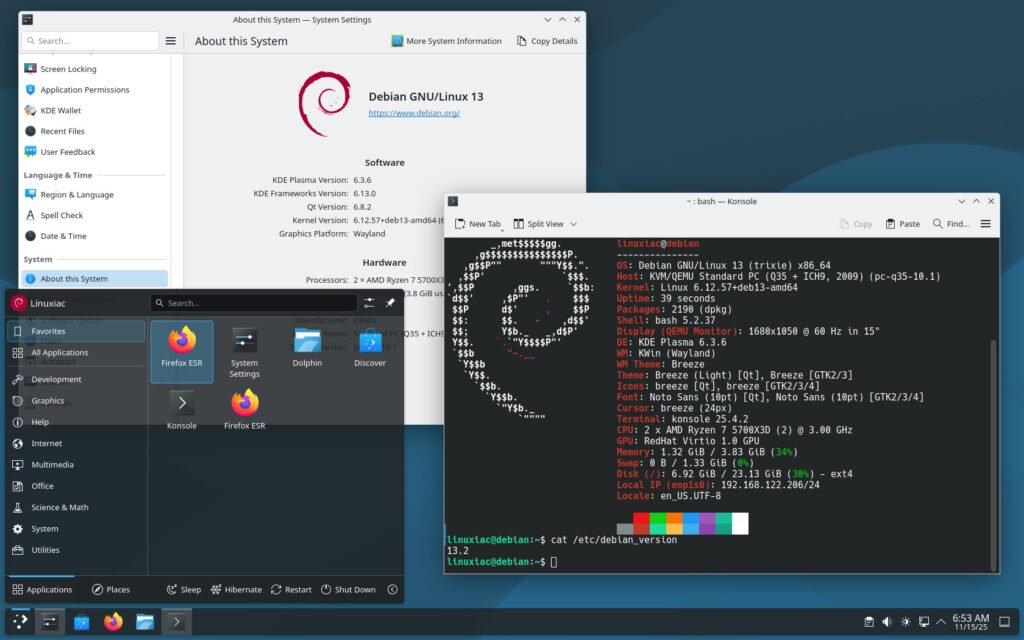
Debian is often considered one of the most reliable Linux distributions and it is easy to see why. They have an entire support policy describing the timeline and support for their releases. The most recent stable version is called Debian 13 \”trixie\” which is a part of a cycle that lasts about 5 years. This consists of 3 years of total support and followed by 2 years of Long-Term Support (Debian).
Debian is one of the best options for a calm, and reliable server. While most other distributions focus on being unique, Debian focuses on being reliable.
Debian is suited for a number of use cases, particularly:
- Lightweight servers
- Self-hosted applications
- Web and Database servers
- Sysadmin Control
- Long running stable systems.
For many servers, the absolute freshness of packages of distributions like Fedora doesn’t matter – it is the consistency of the server that is most valued. This is particularly true for many systems administrators. Debian is the best choice for people who value reliability over flashiness.
3. Rocky Linux – Best serveristic
Rocky Linux is a good Linux serveristic choice that is compatible with RHEL. Rocky Linux aims to build an operating system that has bug-for-bug compatibility with RED Hat Enterprise Linux, and to host Rocky Linux for free for 10 years. They also offer sponsored support for 10 years without any paid support for Rocky Linux 9 and Rocky Linux 10. (Rocky Linux)
Because of this, Rocky Linux has become a great option for many customers in the enterprise Linux space.
Rocky Linux users include:
- Web hosting servers
- Enterprise apps that utilize the RHEL ecosystem
- Environments with hosting control panels
- Users of traditional production workloads
- Users that are migrating from old CentOS systems
Rocky Linux is a good production operating system. Users of CentOS system are typically some of the initial users of Rocky Linux.
4. AlmaLinux – Best for Enterprise Flexibility
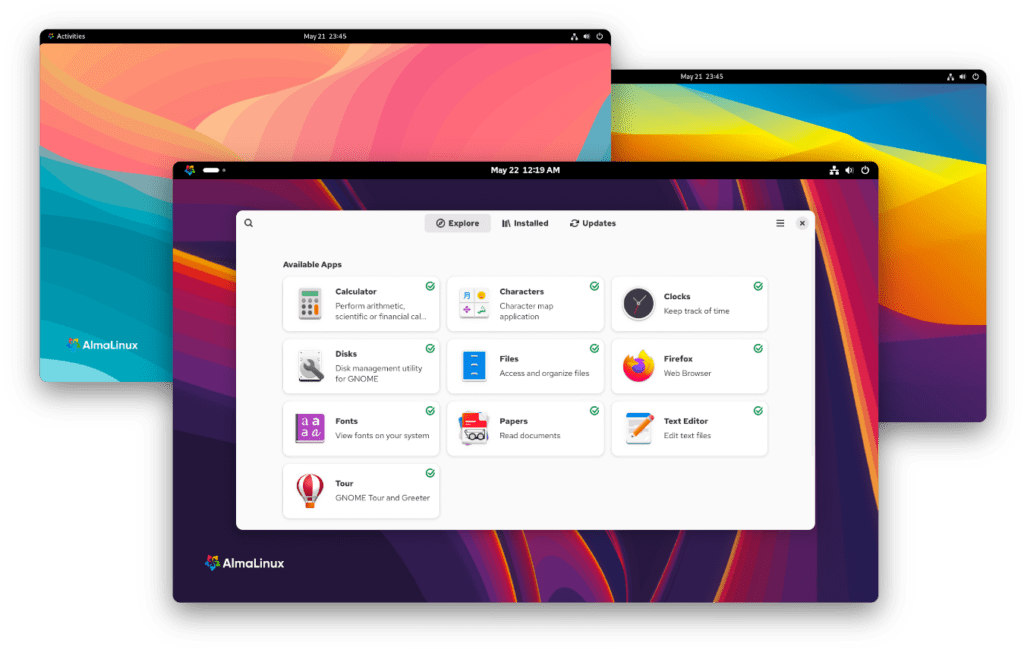
AlmaLinux is one of the best linux server OS alternatives. AlmaLinux comes to the table as a forever-free enterprise-grade operating system for critical workloads. AlmaLinux is very transparent about its long span of support. AlmaLinux 10 has active support until May 2030 and security support until May 2035; as for AlmaLinux 9, it has support until May 2032. (AlmaLinux OS)
Companies that want enterprise-grade stability without the cost find AlmaLinux very appealing. It is often viewed as a direct competitor to Rocky Linux, and in most cases the deciding factor comes down to which of the two is best suited to the users, ecosystem, and support on the grounds.
AlmaLinux is appealing for:
- Complimentary long life support
- Business-grade focus
- Excellent production positioning
- Open-source
- Seamless for migrations from CentOS
AlmaLinux is especially beneficial when you want a reliable server operating system that can support enterprise applications, company websites, internal systems, and infrastructure for a long period.
5. Red Hat Enterprise Linux – Excellent for Support at Enterprise Level
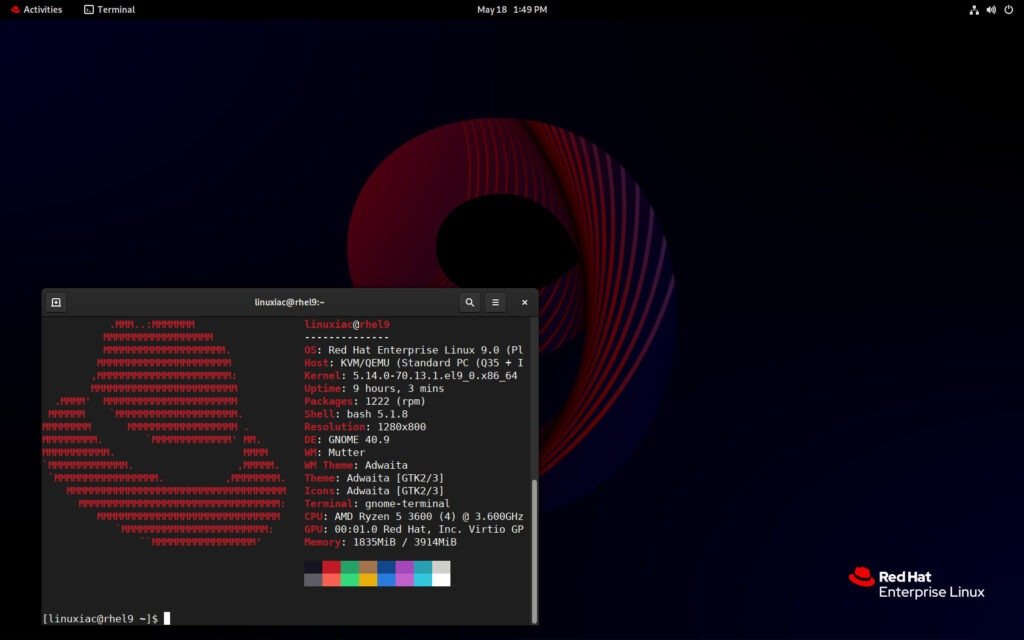
For organizations that require official vendor support, lifecycle planning, commercial tools, and a serious ecosystem, Red Hat Enterprise Linux is unparalleled. Red Hat, for instance, provides a 10-year lifecycle for RHEL 8, 9, and 10, offering full support and maintenance support, plus an extended life phase. RHEL 10 is available as a major release currently, and Red Hat positions it for hybrid cloud, security, and enterprise-scale operations. (Red Hat Customer Portal)
RHEL is commonly the most appropriate for:
- Massive corporations
- Regulation-driven environments
- Companies that have vendor agreements
- SAP, Hybrid cloud, and other large application stack
- Groups that require official support
Expense is the primary disadvantage. RHEL is typically not recommended for personal projects, and is not friendly on the budget, but with the right rationale, including significant costs related to downtime and the critical nature of support, RHEL may be the most appropriate Linux server OS.
6. Fedora Server – Best for New Technologies
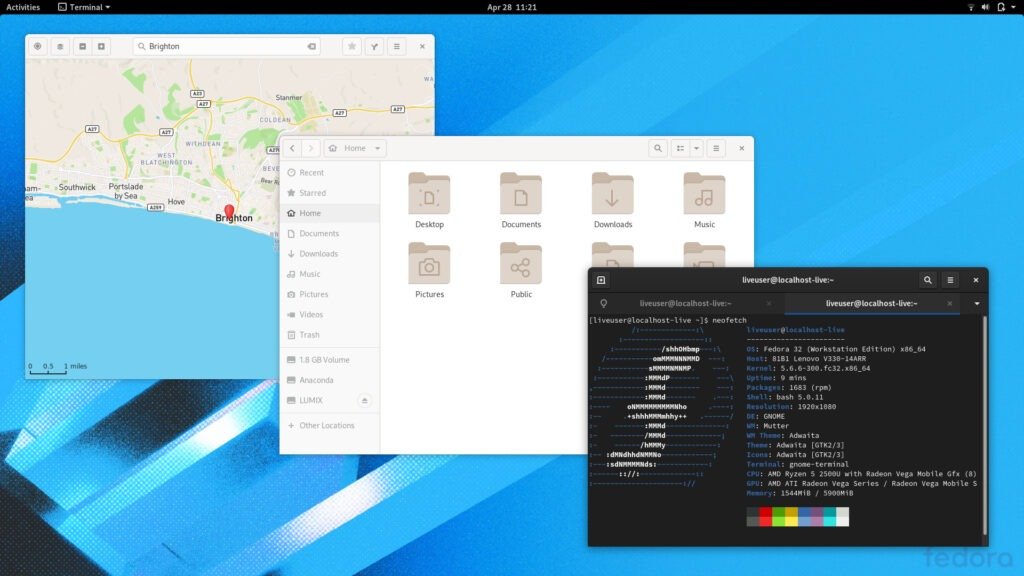
Typically, Fedora Server would not be the first pick for more traditional production servers. However, for developers, labs, testing environments, and administrators who want cutting-edge technologies, it is an excellent option. Fedora touts Fedora Server as a robust and adaptable community server OS, incorporating the best and the newest datacenter capabilities. Fedora Server 43 is set to be released on October 28 2025. According to Fedora’s release policy, it supports shorter cycles than most long-term enterprises. (Fedora Project)
This places Fedora in the best light for:
- Modern development environments
- Rapid testing
- Learning new Linux technologies
- Container-heavy workflows
- Teams that are willing to adopt a new version on a regular basis
Fedora isn’t “bad” for servers. It is just designed with a different set of priorities. If you are looking for faster innovation and more up-to-date packages, Fedora is an incredibly viable option.
7. CentOS Stream – Best for Related Innovations for RHEL
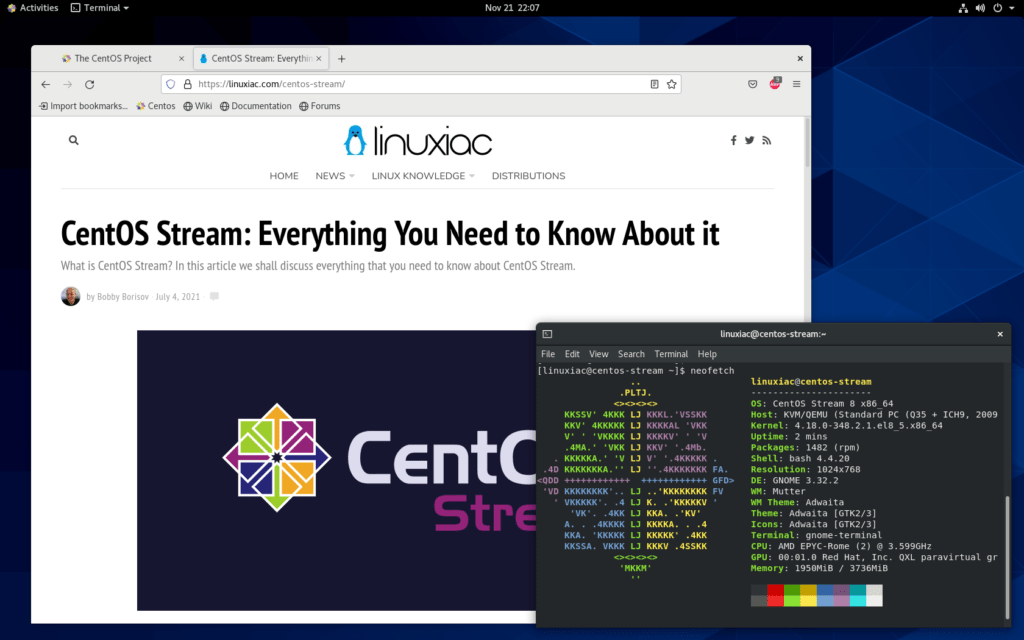
CentOS Stream is not certain, but it is significant. As they describe it, “CentOS Stream is a continuously delivered distribution that tracks just ahead of Red Hat Enterprise Linux and acts as a midstream between Fedora and RHEL.” This is not a legacy CentOS Linux model, which many used to consider CentOS Linux as just another static rebuild of RHEL. (CentOS)
Accordingly, Stream is helpful for:
- Teams working in the RHEL ecosystem
- Developers who wish to have insight into the future direction of RHEL
- Testing
- Organizations that have the comfort level to utilize a slightly more rapidly evolving platform
Where maximum predictability is the goal, producing conservative workloads, Rocky Linux, AlmaLinux, Debian, Ubuntu LTS, and RHEL are often easier recommendations. CentOS Stream is specialized more for a narrower audience.
Other Comments
SUSE Linux Enterprise Server
SUSE is still a worthy enterprise contender. SUSE reports that SLES 16 generally became available in November 2025, and its lifecycle pages show quite a long support planning that can stretch far beyond typical server support lifecycles. (SUSE)
Consider SUSE if your organization already has SUSE tooling, SAP-related infrastructure, or if you want another robust commercial enterprise Linux option.
Oracle Linux
Oracle Linux is of particular relevance for environments that are Oracle heavy. Oracle states that Oracle Linux is free to download, use, and distribute, and also markets Ksplice, a zero-downtime patching solution. (Oracle)
Oracle Linux can be a useful and strategic option if you use Oracle databases or are heavily invested in Oracle’s ecosystem.
Choosing the Right Linux Server Operating System
Selecting the best Linux server OS depends on what you want to do with it.
If you’re a beginner wanting to learn or if you a small business wanting to expand, your best option is Ubuntu Server. This is the best option because it is the most widely known because of the strong community.
Debian is a great option if you want lower resource usage, and maximum reliability.
If you want a Red Hat alternative that is totally free and considered to be, Rocky Linux or AlmaLinux are your best options.
For the highest possible support, and your business needing legal auditing and support. Red Hat Enterprise Linux(RHEL) is your best and only option.
Fedora Server is a great choice for the newest software.
If you want to be on the cutting edge along with development and shifts for future RHEL, then CentOS Stream is what you’re looking for.
The most important thing to consider when deciding on a server OS is support and community, and the above factors relative to your business and what you consider the most.
Final Verdict
So, what is the best linux server os today?
Most people would probably pick Ubuntu Server because of the great long-term support, cloud capabilities, and the documentation backed by the large user base. (Ubuntu)
For many people, a stable system is very important. Because of this, the clean and stable Debian is a favorite among the Linux server operating systems. (Debian)
Rocky Linux and AlmaLinux options are available, and are good options when considering enterprise-like systems and zero subscriptions. (Rocky Linux)
Let’s say, you are a large organization that wants support, in that case RHEL is the best pick and is a premium option. (Red Hat Customer Portal)
While it may depend on who you are talking to, it is best to be practical. Distributions are made for a particular purpose, and that is what they should be used for. These are the factors that will pick the best Linux server OS for your needs.




Keep up the great work.